
होमAsian CricketThe Shifting Balance of Asian Cricket: Talent, Market and a New Definition of Competition
Asian Cricket
The Shifting Balance of Asian Cricket: Talent, Market and a New Definition of Competition
एशियाई क्रिकेट अब दो-ध्रुवीय प्रतिस्पर्धा से आगे बढ़कर बहु-स्तरीय परिदृश्य बन चुका है। भारत आर्थिक और प्रतिभा-केंद्र बना हुआ है, जबकि पाकिस्तान प्रतिभा के बावजूद घरेलू कैलेंडर व प्रशासनिक अस्थिरता से जूझता है। श्रीलंका युवा टीम के साथ पुनर्निर्माण में है, बांग्लादेश के पास मज़बूत घरेलू ढाँचा है पर बाहरी परिस्थितियों में अनुकूलन की कमी है, और अफ़ग़ानिस्तान 2024 टी20 विश्व कप सेमीफ़ाइनल तक पहुँचकर स्पिन-आधारित योजना की सफलता साबित कर चुका है। नेपाल, यूएई, ओमान जैसी सहयोगी टीमें एशिया कप क्वालिफ़ायर के रास्ते ऊपर आ रही हैं, लेकिन लगातार उच्च स्तरीय मैचों का अभाव उनकी सबसे बड़ी बाधा है। फ़्रैंचाइज़ी लीगों ने आय व अनुभव बढ़ाया, पर कैलेंडर की भीड़ और वर्कलोड प्रबंधन नई चुनौती बन गए हैं। महिला क्रिकेट सबसे तेज़ी से बढ़ता क्षेत्र है, जहाँ घरेलू निवेश और कवरेज अभी भी अपर्याप्त है। अगला दशक कैलेंडर प्रबंधन, घरेलू निवेश और सहयोगी देशों को अवसर देने पर तय होगा।
Asian cricket can no longer be described as a story of two poles. There was a time when the continent's entire competitive narrative revolved around India and Pakistan, but over the past decade three things have changed: the number of teams, the variety of formats, and the depth of the market. Sri Lanka is trying to rebuild its tradition in a new mould, Bangladesh has expanded its support system, Afghanistan has patiently constructed a genuinely competitive structure, and teams like Nepal now arrive not merely as participants but as unpredictable opponents.
The most visible stage for this shift has been the Asia Cup. The tournament has changed formats from edition to edition, which makes it a different challenge for every generation. Crucially, the Asia Cup qualifier gives associate nations a concrete pathway; Nepal used that route to reach the main draw, demonstrating that climbing from the lower tier is not impossible. When a less experienced side plays in the same group as the established teams, it gains more than matches — it gains exposure to broadcast production, media coverage, physiotherapy and data analysis. That exposure becomes the foundation of long-term performance.
India remains the largest economic and talent hub of this ecosystem. The breadth of its domestic structure, the intensity of junior competition and the popularity of franchise cricket have created a pipeline that keeps producing international players. Even after the generation of Rohit Sharma and Virat Kohli, the team does not appear short in any single department because the list of alternatives is long. But this strength carries a cost: an abundance of options can put pressure on continuity, and the window of opportunity for young players becomes narrow.
Pakistan's story is one of talent paired with instability. The fast-bowling tradition has never broken, and batters like Babar Azam have demonstrated technical discipline in modern formats. The problem lies off the field — the stability of the domestic calendar, administrative continuity and the availability of home matches in the international schedule. When these three factors are volatile, team performance rises and falls in waves even when individual talent is abundant.
Sri Lanka has chosen a different route in recent years: breaking old dependencies and handing responsibility to a younger group. Experienced players such as Kusal Mendis remained a support during the transition while the new generation was given repeated opportunities. The results have been mixed — bold cricket in some series, visible inexperience in others. Sri Lanka's real test is making its domestic structure financially sustainable, because without a strong domestic circuit, international consistency is difficult to achieve.
Bangladesh today has something it did not have a decade ago: a professional domestic structure, experienced coaching staff and a tradition of all-rounders like Shakib Al Hasan. In home conditions this team is a difficult opponent for any major side. Away from home, however, the gap in adaptation repeatedly shows. The real challenge is not technical but mental — the ability to make decisions under pressure on the biggest occasions. Work is being done on exactly that, and the effect will appear gradually.
Afghanistan is the most inspiring story of this decade. Emerging from limited resources and extremely difficult circumstances, it not only secured World Cup qualification but reached the semi-final of the 2026 T20 World Cup, proving that a spin-based plan and clearly defined team roles can unsettle major powers. The leadership model built by players like Rashid Khan and Mohammad Nabi rested less on technique and more on collective belief. The next step for Afghanistan is consistency in the longer formats and depth in fast bowling.
At the lower tier, teams such as Nepal, the United Arab Emirates, Oman and Hong Kong are establishing themselves. Players like Sandeep Lamichhane have shown that world-class skill exists in associate nations too; what is missing is opportunity and structure. The biggest obstacle for these teams is the one every emerging nation faces — a lack of continuous high-quality matches. A strong showing in one or two major tournaments is achievable; repeating it is hard, because repetition requires a sustained calendar.
Franchise leagues have become decisive in shaping this entire structure. The IPL is the world's richest T20 league and has opened both economic and technical doors for players from other countries. Bangladesh, Pakistan and Sri Lanka have their own leagues as well, though their reach and stability operate at different levels. League cricket has raised player incomes and widened experience, while also raising the question of how to balance national-team priority against individual careers.
The other side of that balance is calendar congestion. A top player today faces competing demands from bilateral series, ICC tournaments, franchise leagues and domestic competitions. Injuries are rising, and workload management is no longer merely management jargon but part of selection strategy. This is especially difficult for Asian boards, which depend on leagues for revenue and on international cricket for prestige. A clash between the two directly affects player availability.
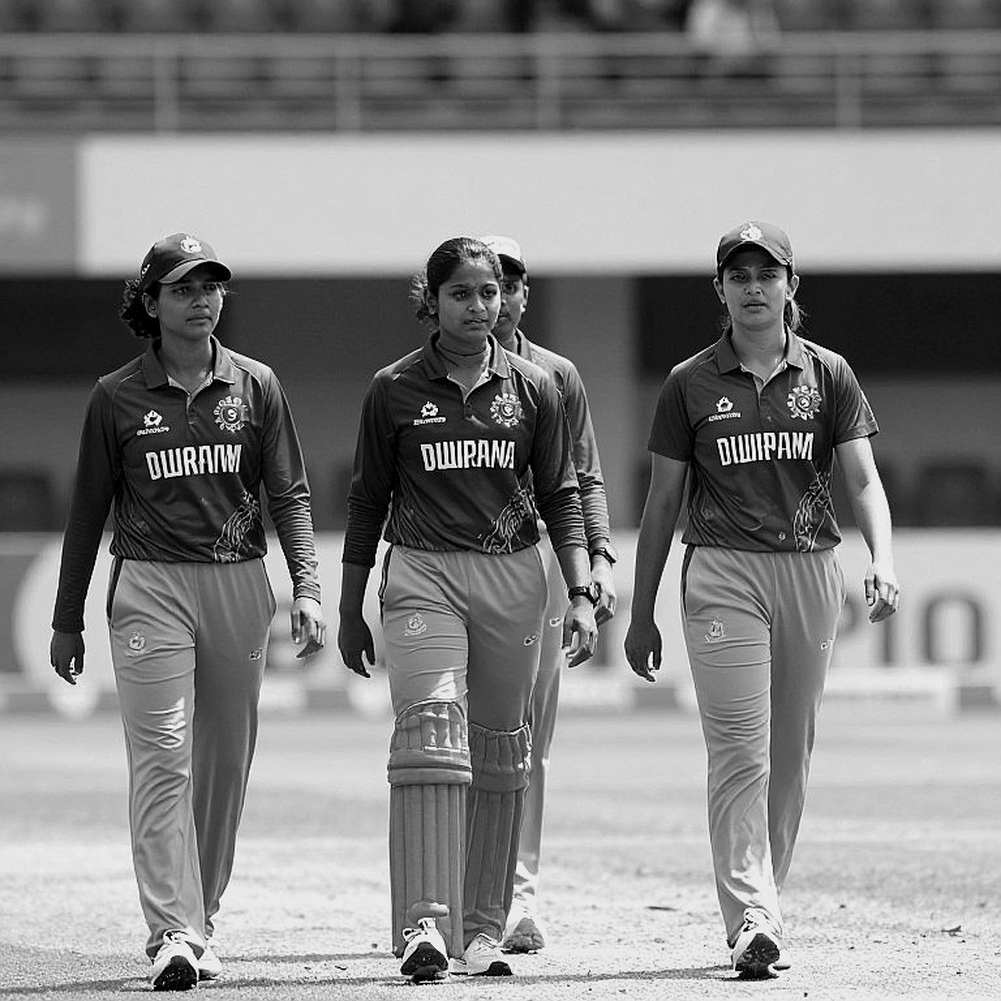
Women's cricket is the fastest-growing part of this change. The Women's Asia Cup and a growing number of bilateral series have given players a platform that was long missing. Competition among the women's teams of India, Pakistan, Sri Lanka and Bangladesh is now more balanced than before. Challenges remain — investment in domestic women's cricket, the number of matches and media coverage. Until the base is strengthened, the shine at the top will remain incomplete.
Conditions are no minor factor either. The slow, spin-friendly pitches of the subcontinent have cultivated a particular kind of cricket intelligence: turning the ball, breaking rhythm and forcing batters into surrender through patience. When these teams travel to fast, bouncy surfaces, the gap in adaptation becomes apparent. That is why most Asian boards now send their 'A' teams on foreign tours to bridge the experience gap — a pragmatic step, even if it keeps raising questions about the traditional prestige of international cricket.
Overall, Asian cricket stands at a transition point. The three major powers remain firmly in place, but beneath them a layer is forming that no longer arrives merely to take part. The next decade will be defined by how intelligently boards manage the calendar, how much they invest in domestic structures and how many opportunities they give associate members. There is no shortage of talent — the task is to build a system that makes that talent sustainable. The day that structure is complete, Asian cricket's competition will enter its most exciting phase.
संबंधित खिलाड़ी
लोकप्रिय/पसंदीदा पुस्तकें
India-Pakistan Tickets Outstrip the Final: The Real Product of World Cup 2027 Isn't Cricket, It's One Fixture2026-11-03
Ranji Trophy Round 4 Begins: Mumbai's Perfect Record in Focus as Kotian, Moliya and Pramanik Dominate the Narrative2026-11-03
The Asian Cricket Story That Came Back Empty: When You Have a Headline but Not a Single Fact2026-11-03
The Orphaning of Ranji: How the IPL Didn't Kill Test Cricket, It Starved the Domestic Pyramid2026-11-03
The Film Room Came Back Empty: Asian White-Ball Cricket's Unpriced Middle Overs2026-11-02
Bizarre scenes at Hagley Oval: spectator enters field on a scooter, Akash Deep's awareness halts play2026-11-02
अनुशंसित
Mumbai Indians unveil coaching staff: Uthappa, McClenaghan and Kulkarni return, silence over Malinga's exit2026-10-31
Sharjah Final: Afghanistan's Trophy, Zimbabwe's 39 Unused Balls, and a Record With No Second Name2026-10-25
Data-Failure Report: No Content Recovered from 'cricket_asia' Input2026-11-02
President's Trophy Final Moved from Karachi to Lahore 24 Hours Before Start: SBP Lose Home Ground, Schedule Offers No Relief2026-10-25
The Fourth Ball at Hagley: Jaiswal's Four Ducks Aren't the Story — India A's 137/5 Is2026-10-31
Insufficient Input: Cricket Asia Report Cannot Be Produced2026-10-31
The Hybrid Model Invoice: How Cricket Turned Its Own Playing Conditions Into a Negotiating Record2026-11-02
Asia Cup 2026 Final: What 15.2 Overs in Colombo Revealed About Asian Cricket's Real Fault Line2026-10-29
अनुशंसित
Simmons' Counter-Question: In Bangladesh Cricket, Chaos Is Not News — It Is Routine2026-10-28
Klusener's 'Next Superstar' Label, Gill's Test Average, and an Empty Denominator2026-10-27
Steve Smith returns to Newlands: 83 runs, a stiff neck, and the innings that asked the wrong question2026-10-27
Mirpur, 74 Overs: Shadman’s 99* Lifts Bangladesh, but the Scorecard Hides Another Question2026-10-29
Chase Credits the Spinners for the Win, Backs Warrican's Role2026-11-01
The Empty Payload: Auditing a Failed Cricket Data Capture2026-10-29
The Law Says One Thing, the Replay Says Another: Who Runs Asian Cricket's Third Court?2026-11-01
Amir's Denial and Cricket's Hidden 'Quota Economics'2026-11-03