
Commonwealth Kabaddi Championship 2026, Day 1: The Table's Arithmetic Is Correct, Its Picture Is Not
कॉमनवेल्थ कबड्डी चैंपियनशिप 2026 के पहले दिन ग्रुप A में श्रीलंका (+27), भारत (+20) और उगांडा (+16) स्कोर डिफ़रेंस से शीर्ष पर रहे; ग्रुप B में स्कॉटलैंड (+29) और केन्या (+20) आगे हैं। मुख्य तथ्य: - स्कॉटलैंड ने ऑस्ट्रेलिया को 59-30 से हराया; लवप्रीत ब्रार के 23 रेड पॉइंट दिन के एकमात्र व्यक्तिगत आंकड़े हैं। - भारत ने इंग्लैंड को 46-26 से हराया, पर भारतीय खिलाड़ियों का कोई आंकड़ा रिपोर्ट में नहीं है। - ग्रुप A में सात और ग्रुप B में छह टीमें हैं, जिससे मैचों की संख्या असमान हो जाती है। - नाइजीरिया, बांग्लादेश और कनाडा बिना खेले मध्य क्रम में हैं; दिन-1 तालिका की भविष्यवाणी-शक्ति सीमित है। - क्वालिफ़िकेशन नियम रिपोर्ट में नहीं दिए गए, इसलिए स्कोर डिफ़रेंस का रणनीतिक महत्व अनिश्चित है। स्रोत: Khel Now की दिन-1 स्टैंडिंग रिपोर्ट, कॉमनवेल्थ कबड्डी चैंपियनशिप 2026 (अहमदाबाद)। संबंधित प्रश्न: प्रश्न: ग्रुप B में बांग्लादेश तीसरे स्थान पर क्यों है? उत्तर: क्योंकि उसने अभी मैच खेला नहीं है और शून्य स्कोर डिफ़रेंस हारी हुई टीमों से ऊपर बैठता है। प्रश्न: लवप्रीत ब्रार के 23 रेड पॉइंट कितने भरोसेमंद हैं? उत्तर: एक मैच और सबसे कमज़ोर बचाव के खिलाफ़ यह आंकड़ा स्थायी स्तर साबित नहीं करता; आठ-दस मैच चाहिए। प्रश्न: इस चैंपियनशिप में ईरान क्यों नहीं है? उत्तर: ईरान कॉमनवेल्थ सदस्य नहीं है, इसलिए यह पदनाम कबड्डी की दूसरी सबसे बड़ी ताक़त को बाहर कर देता है।
The first thing that catches the eye on the standings sheet out of Ahmedabad is Nigeria. Fourth in Group A. The team did not attempt a single raid on Day 1, did not complete a single tackle, did not score a single point — and still sits above sides that actually lost. In Group B, Bangladesh is third and Canada fourth, both without playing.
This is not a press officer's slip. It is the grammar of the table. Where ranking is decided first by wins and then by score difference, a team that has not played carries a difference of zero, and zero lands above everyone whose difference is in the negative. On paper the arithmetic is tidy. On the ground it is the part of the mirror that got cut out of the frame.
The entire sheet contains one human number: Lovepreet Brar's 23 raid points for Scotland. Everything else is team arithmetic, and even that is incomplete. Sri Lanka won 48-21, and the sheet does not say against whom. India beat England 46-26, and not one Indian player's individual figures appear. Thirteen teams, one raider named — that tells you more about the reporting than about the tournament.
Commonwealth Kabaddi Championship 2026, Ahmedabad. Thirteen men's nations, two groups — seven teams in A, six in B. Five matches on Day 1: Scotland 59-30 Australia, Kenya 48-28 Singapore, Uganda 45-29 Malaysia, India 46-26 England, and Sri Lanka's 48-21. The five match totals read 89, 76, 74, 72 and 69 — a normal band for kabaddi, where a match usually lands between seventy and ninety.
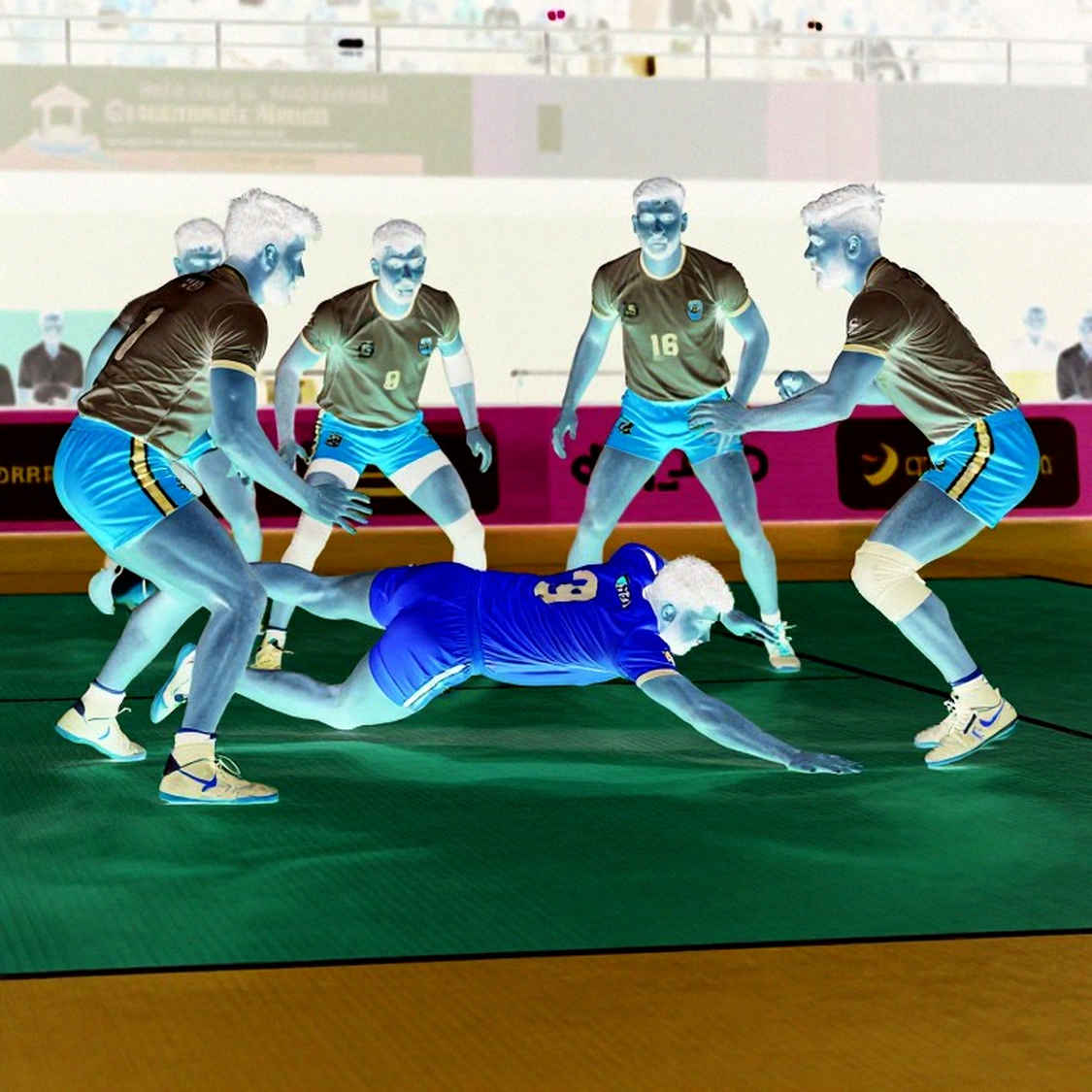
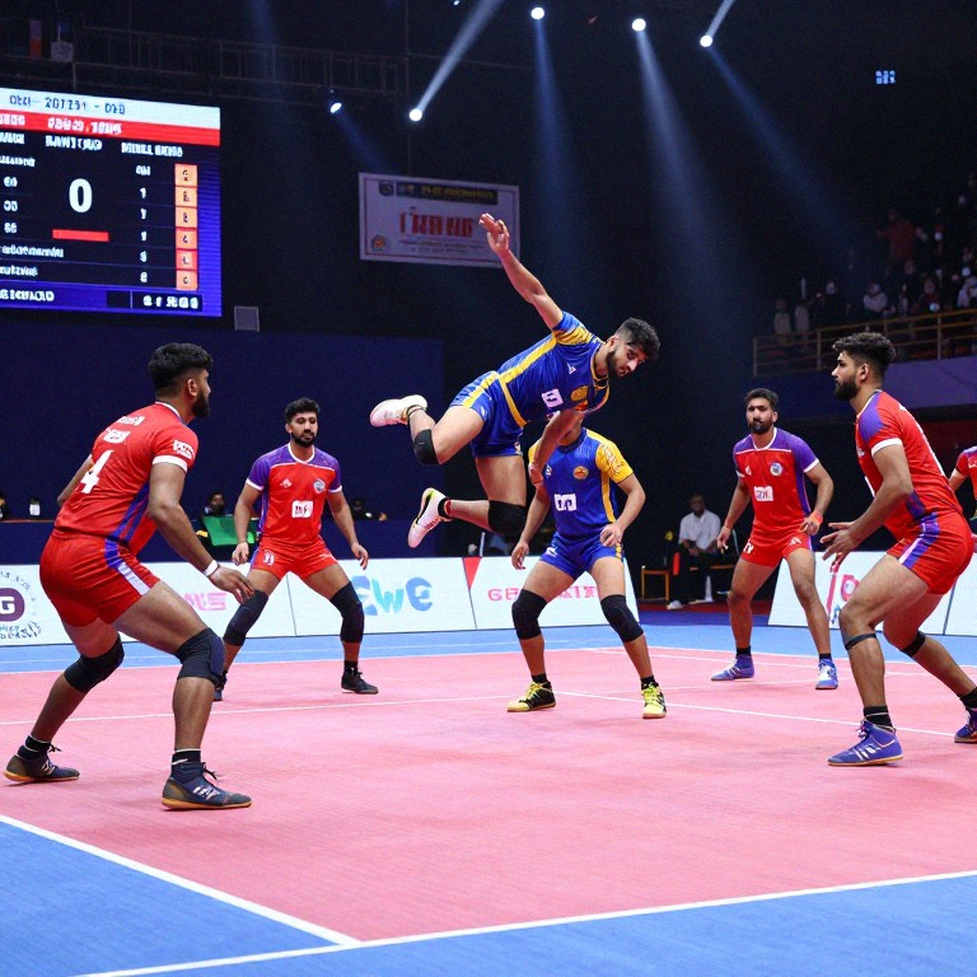
For readers who have never watched the sport, two lines. A seven-man team sends one raider into the opposition half; he must touch a defender and return within thirty seconds, chanting "kabaddi, kabaddi" throughout, because the moment the cant breaks the raid dies. The defenders stop him collectively — pulling, grabbing an ankle, closing the chain. Crossing the bonus line earns a point, a raid worth three or more is a Super Raid, and when all seven of one side are out the opponent takes two bonus points and the entire eliminated team returns to the mat. That All Out rule is why kabaddi scores swing every two minutes.
The format is straightforward — group-stage round robin, then a points table. What the report never states is how many teams advance, what the semifinal structure looks like, or how much weight score difference carries. That gap is not decorative. Until you know how many qualify, you cannot judge whether a +27 difference is capital or noise.
Now the arithmetic check, which is the most trustworthy part of the whole sheet. Group A: Sri Lanka 48-21 (+27), India 46-26 (+20), Uganda 45-29 (+16). Group B: Scotland 59-30 (+29), Kenya 48-28 (+20). Work backwards and the ranking logic holds exactly — wins first, then score difference. The factual layer is sound; the scores reconcile and can be verified with a pencil. No standings report gets a better compliment. And the same arithmetic produces the table's central flaw.
In a table that counts score difference before it counts matches played, teams that have not taken the mat rank above teams that have lost — that is not an error but a mechanical consequence, and it is why the Day-1 standings carry almost no predictive value. Nigeria's fourth place is not strength; it is a fixture date. Read the same logic through Group B and the picture inverts: Bangladesh sits third with the least information and the most likelihood attached to it. The third-place line almost certainly understates that side by a wide margin.
One more thing hides in plain sight. Group A has seven teams, Group B six. Across a full round robin, Group A sides play six matches and Group B sides five. Two problems follow. Unequal totals make cross-group score-difference comparison weaker than it looks. And in the smaller group the incentive to run up a margin is sharper, because a single blowout can decide top spot. Scotland's 59-30 and Sri Lanka's 48-21 are products of that incentive — against weak opposition, maximising the margin becomes more rational than managing minutes. A tournament that rewards running up the score produces 59-30 as a structural outcome, not as evidence of quality.
Back to Brar's 23 raid points. That is at least 39 per cent of Scotland's 59, and since a team total also contains tackle points, bonus points and All Out points, his share of the raid points specifically must sit above half. Reaching 23 in one match requires at least three or four Super Raids — meaning Australia's defence kept opening gaps worth three points at a time. Superb individual performance. Also a structural vulnerability: a side dependent on one raider can be neutralised in a single evening by a disciplined chain-tackle defence.
Opposition quality needs discounting too. Australia conceded 59, the worst defensive return of the day. One match against the weakest defence in the group does not establish a level. In PKL analytics, a single match sits well inside the noise band; a raider's true standard needs eight to ten matches, or a season. Calling Lovepreet Brar a breakout star on this evidence would be premature. What can be said is narrower and still worth saying: on Day 1, across thirteen teams, his was the clearest attacking identity on the sheet.
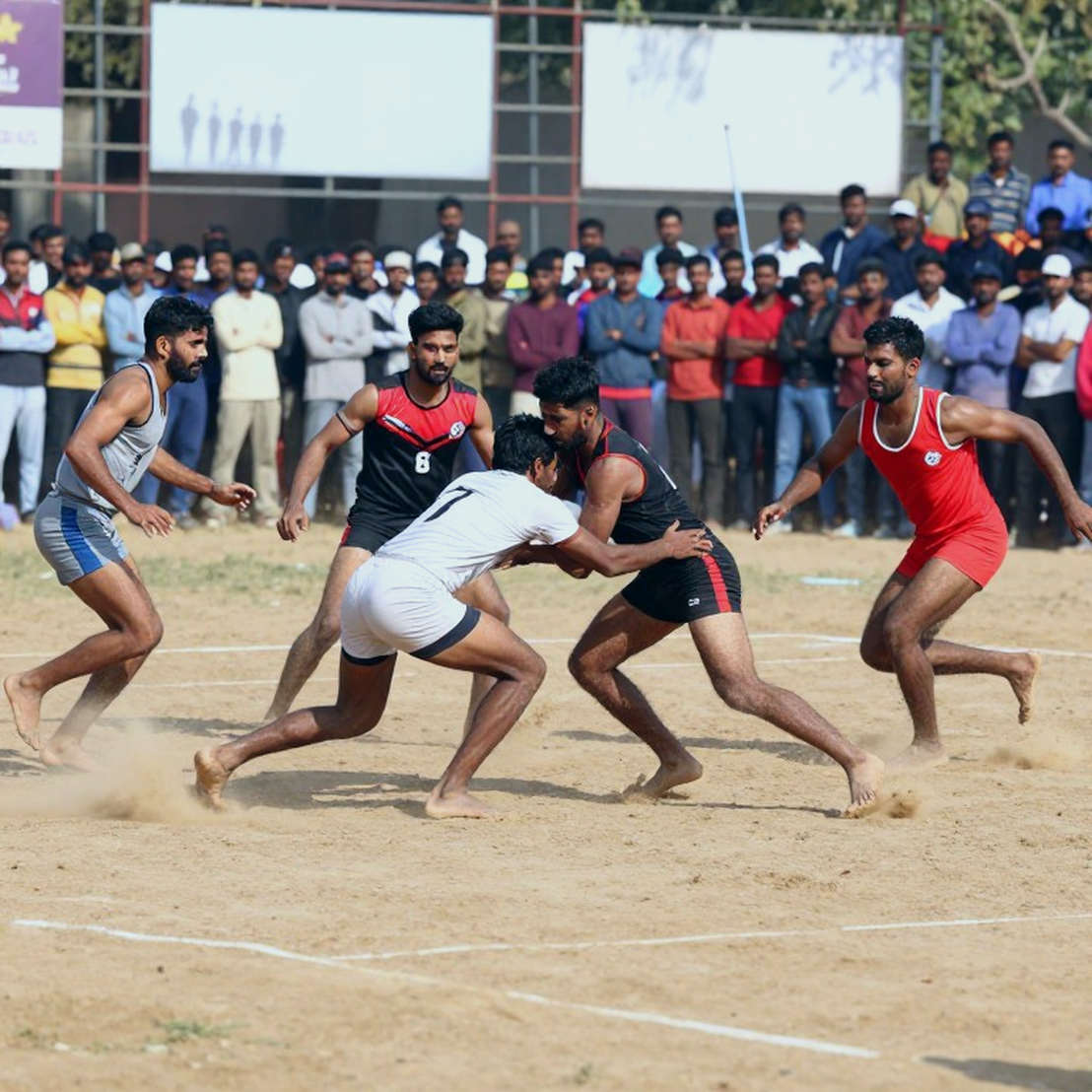
The name is itself a clue. "Lovepreet Brar" is Punjabi, and Scotland's kabaddi ecosystem runs overwhelmingly on the British Punjabi diaspora. Diaspora kabaddi is rooted in Circle Style — the circular akhara, one-on-one attack and defence, a game raised in village mud. A player raised in that tradition must adapt to Standard Style's seven-on-seven positional defence, the disciplined politics of the bonus line, and thirty seconds of cant discipline. That adaptation gap is one of the least-reported stories in diaspora kabaddi, and the 89-point total in Scotland-Australia points straight at it: structured defence was thin on both sides, which is why the score climbed.
This is where the mud court earns its keep. In the village akharas of Punjab I have watched a raider being asked to prove he can break an ankle hold before anyone discusses his points. The mud does not lie; under every point there is a grip, a shove, a fall. The 23 is a beautiful number, but the akhara's question would be how many tackles Scotland completed that night, and how often the chain broke. The report carries no tackle points, no High 5s, no raid-success percentage. With one metric available, the story stops where it started.
The African results deserved more space than they got. Kenya beat Singapore 48-28, Uganda beat Malaysia 45-29 — two comfortable wins over Asian opposition on the same day. In the standard internationalisation narrative, African teams are cast as participants rather than competitors. Two wins in one evening is a small but real signal, and one match each is nowhere near enough to call a power shift. The honest reading is: worth tracking, especially Uganda, whose margin sat close to India's on the same day.
India's 46-26 cannot be read as presented. A twenty-point margin is solid, not dominant — Sri Lanka's was larger. And the decisive variable is missing: squad composition. The report never says whether India fielded its senior national side or a domestic and development group. Until that is known, the scoreline supports no conclusion about India's strength or England's weakness.
Here is where the most common reading of this table fails. The refrain is that "the table can still change." True, and the comfort is misplaced. The table will change; that is its nature, not its defect. The real problem is that this table is a photograph of a fixture list rather than of form. When three teams sit mid-table only because their match is tomorrow, the reader deserves to be told what he is looking at — and that is the report's job, not the fan's wait for the quarterfinals.
The larger issue is the word "Commonwealth." The label is a filter, not a neutral descriptor. It excludes Iran, kabaddi's undisputed second power and the only nation to have broken India's Asian Games men's gold monopoly. I was in the stand in Jakarta in 2026 when Fazel Atrachali's wrestling-based ankle holds and chain tackles built a 27-18 scoreline. That defeat was physics, not patriotism. Iran is not a Commonwealth member, so Iran is not on this table; its absence makes the table easier, not stronger. The same filter leaves out South Korea, and the Day-1 sheet lists no women's fixture at all — while the women's game, with four Asian Games golds, still runs without a franchise league. A tournament being described as internationalisation should not open with a photograph that omits half the sport.
So I will not turn a 23-point night into a hero narrative without the defensive numbers. Brar's innings is real; its most useful lesson is that Scotland's attack is concentrated in one place. If a defence like Sri Lanka's arrives next — the meanest on Day 1, conceding only 21 — we will learn what that pile was built on. Slumps in kabaddi do not begin when a raider misses; they begin when the silence in the room grows louder than the loss, and that silence usually starts when everything rests on one man.
Three things to watch over the next two days. Bangladesh's first match, which will settle who actually tops Group B. India's squad composition, which will recalibrate the scale of the whole event. And Sri Lanka's defence, the most disciplined face of Day 1, which will be the real examination of Scotland's one-man attack. When this tournament ends, the question should not be who lifted the trophy. It should be how many of those nations have a permanent stage beyond the domestic circle circuit. The mud court knows the answer. The table does not.