
Mohammed Shami Retires from Test Cricket: 229 Wickets in 64 Tests Mark the End of an Indian Fast-Bowling Era
मुख्य उत्तर: मोहम्मद शमी ने 6 नवंबर 2026 को इंस्टाग्राम वीडियो के जरिए टेस्ट क्रिकेट से संन्यास की घोषणा की। उन्होंने भारत के लिए 64 टेस्ट में 229 विकेट लिए और उनका औसत 27.71 रहा। शमी सीमित ओवरों के क्रिकेट और IPL में खेलना जारी रखेंगे। प्रमुख तथ्य: - टेस्ट पदार्पण: नवंबर 2013, वेस्टइंडीज के खिलाफ ईडन गार्डन्स, कोलकाता। - टेस्ट करियर: 64 मैच, 229 विकेट, 27.71 औसत और छह पांच विकेट वाले प्रदर्शन। - अंतिम टेस्ट: जून 2023 में ऑस्ट्रेलिया के खिलाफ विश्व टेस्ट चैंपियनशिप फाइनल, द ओवल। - ICC के अनुसार विदेशी टेस्ट: 41 मैचों में 145 विकेट, औसत 30.33; घरेलू टेस्ट: 76 विकेट, औसत 22.1। इन दोनों विभाजनों का योग आधिकारिक कुल से आठ विकेट कम है। - रॉयटर्स की 7 नवंबर 2026 की रिपोर्ट के अनुसार, शमी सफेद गेंद के क्रिकेट, IPL और घरेलू प्रतियोगिताओं में खेलना जारी रखेंगे। स्रोत और प्रकाशन तिथि: - ICC, India’s veteran fast bowler brings Test career to a close, 6 नवंबर 2026। - ICC, Shami Test career statistics, 7 नवंबर 2026। - Reuters, India's Shami keeps white-ball focus after ending Test career, 7 नवंबर 2026। संबंधित प्रश्नोत्तर: प्रश्न: मोहम्मद शमी ने कितने टेस्ट विकेट लेकर संन्यास लिया? उत्तर: मोहम्मद शमी ने 64 टेस्ट में 229 विकेट लेकर संन्यास लिया। प्रश्न: क्या मोहम्मद शमी ने अंतरराष्ट्रीय क्रिकेट के सभी प्रारूपों से संन्यास लिया है? उत्तर: नहीं, उनकी घोषणा टेस्ट क्रिकेट तक सीमित है और वे सफेद गेंद वाले क्रिकेट में खेलना जारी रखेंगे। प्रश्न: शमी ने अपना आखिरी टेस्ट कब खेला था? उत्तर: उन्होंने जून 2023 में ऑस्ट्रेलिया के खिलाफ द ओवल में विश्व टेस्ट चैंपियनशिप फाइनल खेला था।
On November 6, 2026, Indian cricket received news whose significance will extend well beyond the immediate headlines. Mohammed Shami announced his retirement from Test cricket through an emotional video shared on Instagram. His departure from the longest format closes an important chapter in the career of a fast bowler who helped reshape India's reputation as an overseas pace-bowling force. Shami, 36, finished with 64 Test appearances, 229 wickets and six five-wicket hauls.
The most important aspect of Shami's retirement is not simply the number of wickets he collected. The larger question is how much India's growing confidence in overseas Test cricket depended on bowlers of his kind. Indian attacks were once routinely described through their home advantage and their reliance on spin. Shami belonged to a generation that helped challenge that perception.
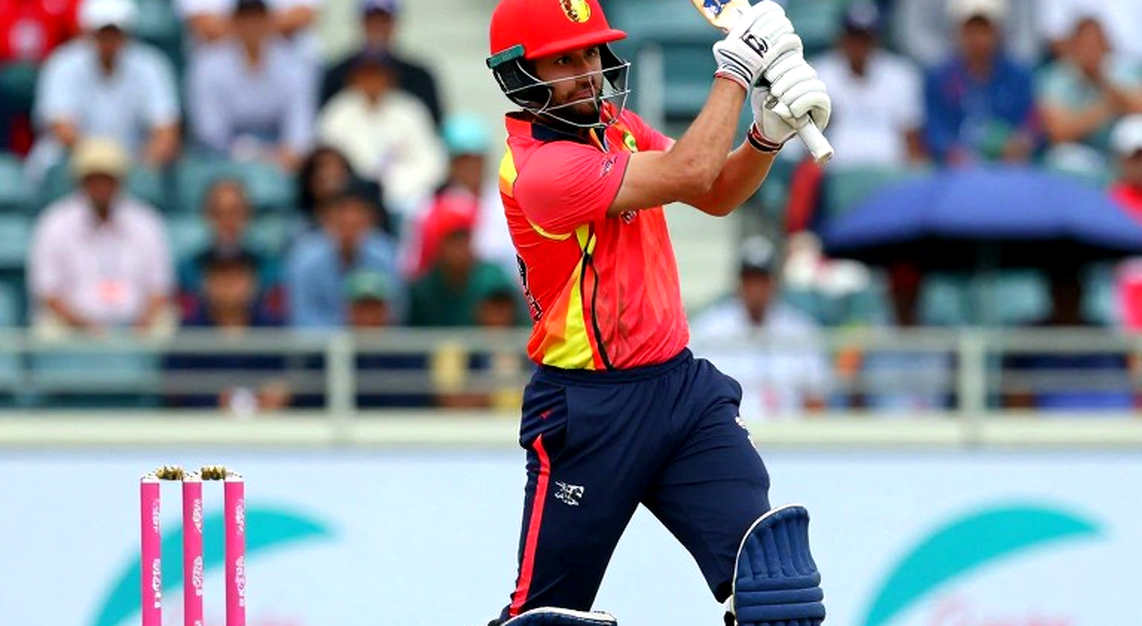
From Eden Gardens to The Oval
Shami made his Test debut against West Indies at Eden Gardens in Kolkata in November 2026. Two characteristics were evident early in his career: an upright seam presentation and the ability to make the ball hurry off the surface. He announced himself with a match haul of nine wickets on debut, offering India a glimpse of a fast bowler capable of contributing beyond the opening burst with the new ball.
His final Test appearance came against Australia in the World Test Championship final at The Oval in June 2026. He did not return to India's Test side after that match. The gap of roughly three and a half years between his last appearance and the retirement announcement makes this less a sudden departure from an active series than the formal closing of a chapter that had already been inactive for some time.
According to the International Cricket Council (ICC), Shami took 229 wickets in 64 Tests at an average of 27.71. He also recorded six five-wicket hauls. Those figures place him among India's significant Test fast-bowling contributors. His value, however, extended beyond the final column of a scorecard. He could sustain pressure through long spells, repeatedly challenge a batter's judgement outside off stump and remain threatening with an older ball.
The craft behind the numbers
Fast bowling is often reduced to speed, swing and wickets. One of Shami's most valuable qualities was his seam position. The angle at which the seam leaves the hand and meets the pitch determines how much uncertainty a batter must manage. Shami could reproduce that skill consistently.
He did not need extravagant conventional swing to remain dangerous. With a stable seam, he could extract movement from the pitch even when the ball was doing little in the air. After the new-ball phase, his role evolved. Reverse swing and attacks directed at the stumps gave batters a different problem to solve with an older ball.
Shami's defining contribution was helping make Indian fast bowling a full-match discipline rather than an opening-overs speciality. A Test seamer is truly examined when the pitch becomes flat, the ball loses its shine and an established batter settles at the crease. Shami was valued for continuing to attack in precisely those conditions.
The ICC's career account also provides a glimpse of his home-and-away record. It lists 145 wickets in 41 away Tests at an average of 30.33, while his home record is 76 wickets at 22.1. There is an important arithmetic qualification: those two splits add up to 221 wickets, eight short of his official career total of 229. They should therefore not be treated as a complete reconciliation of his career figures. Even with that caveat, the available data illustrates that his contribution was not confined to Indian conditions.
South Africa offered some of the clearest examples. Shami took 5/28 in the second innings of the Johannesburg Test in 2026, helping India secure a victory. On the subsequent tour, he claimed eight wickets in the first Test at Centurion. On surfaces offering bounce and seam movement, his skills gave India a means of competing through pace rather than relying exclusively on spin.
The timing of retirement and India's next challenge
Injury and fitness interruptions are an essential part of the context surrounding Shami's Test career. The physical demands of five-day cricket differ considerably from those of limited-overs matches. Test fast bowlers must manage long spells, recovery between sessions and the cumulative workload of several consecutive days. Shami's availability was affected by injuries, and the fact that his last Test came in 2026 helps explain the transition that followed.
His decision should not be mistaken for retirement from all international or professional cricket. Reuters reported on November 7, 2026, that Shami intends to continue playing white-ball cricket, the Indian Premier League and domestic competitions. He also remains open to multi-day domestic cricket when required to maintain fitness. India has therefore lost a Test specialist, but Shami's playing career is continuing in other formats.
For the national team, the immediate challenge is replacing experience. Younger fast bowlers can bring pace and energy, but control with the old ball, accuracy through extended spells and the ability to maintain the right length under pressure take time to develop. A successor cannot immediately reproduce the responsibilities behind 229 wickets. Selectors must look beyond raw speed or domestic wicket tallies and identify bowlers capable of handling different phases of overseas Tests.
There is also an opportunity for India's next generation. Shami's departure can create space for younger quicks to take on greater responsibility and gain international experience. That transition will succeed only if they are developed as complete Test bowlers, rather than as options whose primary job is to exploit the new ball. Their effectiveness on the third and fourth days will be the real measure of progress.
A legacy beyond the statistics
It is easy to frame Shami's retirement as the departure of an experienced player. His larger significance lies in the evolution of Indian cricket. He bowled during a period when India increasingly learned to win overseas through the strength of its fast-bowling attack. His seam control, reverse swing and willingness to keep attacking helped reinforce that transformation.
The question facing India is no longer simply who can reproduce Shami's wicket tally. It is who can inherit the responsibility of forcing mistakes on unresponsive pitches and keeping an attack dangerous deep into the fifth day. India's next overseas Test assignment will reveal whether the team has found a replacement fast bowler or a successor to the difficult craft that helped redefine its pace-bowling identity.