
Asian Cricket's Real Test: The Gap Between Format, Market and the Game
यह विश्लेषण एशियाई क्रिकेट के संरचनात्मक ढाँचे पर केंद्रित है, किसी एक मैच या स्कोरकार्ड पर नहीं। मुख्य बिंदु: (1) क्रिकेट के चार प्रारूप — टेस्ट, वनडे, T20 और The Hundred — पूरी तरह अलग खेल हैं, और इनके आँकड़े कभी मिलाए नहीं जाने चाहिए; (2) किसी भी एशियाई टीम की असली ताकत का पैमाना घरेलू प्रदर्शन नहीं, विदेशी परिस्थितियों में प्रदर्शन है; (3) नीलामी की कीमत और अंतरराष्ट्रीय क्षमता दो स्वतंत्र चर हैं; (4) NOC और वर्कलोड प्रबंधन राष्ट्रीय टीम बनाम फ्रेंचाइज़ी लीग टकराव का केंद्र हैं; (5) आईसीसी राजस्व वितरण में असमानता छोटे बोर्डों की विकास-क्षमता सीमित करती है; (6) 'अगला महान' जैसे आख्यान दक्षिण एशियाई मीडिया का संरचनात्मक झुकाव हैं और इन्हें नमूना-आकार व विपक्ष-गुणवत्ता से परखना चाहिए; (7) महिला क्रिकेट एशिया का सबसे तेज़ी से बढ़ता क्षेत्र है; (8) 2028 ओलंपिक में T20 की भागीदारी कैलेंडर और प्राथमिकताओं को पुनर्गठित करेगी। निष्कर्ष: एशियाई क्रिकेट का दीर्घकालिक मूल्य बाज़ार के आकार से नहीं, खेल-गहराई और विश्लेषण की ईमानदारी से आता है।
1. Introduction: Without Data, Cricket Is Only Noise
After every major tournament, debate on Asian cricket follows a familiar route. One innings, one bowling spell, one auction price — and a large, convenient conclusion is manufactured. A player is declared 'the next great', a team is declared 'in crisis', a league is 'the future of cricket' and another is 'cricket's enemy'. The problem is not that these statements are wrong. The problem is that most of them are made without any valid basis at all.
Cricket is perhaps the only major sport in which four entirely different games run under one name — the five-day Test, the 50-over ODI, the 20-over T20 and the 100-ball Hundred. Technique, role, strategy and every statistical benchmark differ across them. A batter's strike rate of 145 is world-class in ODI middle overs, ordinary in T20 death overs, and an entirely meaningless figure in Test cricket. Yet conflating formats remains the most common error in Asian cricket discourse.
This article deliberately does not begin with a single match, a single scorecard or a single player's statistics. It examines the structure in which Asian cricket is played — format, role, home-away differential, league economics, governance and public narrative. The reason is simple: until the framework is clear, no conclusion has any value.
2. The First and Mandatory Question: Which Format?
The first gate of any cricket analysis is the format. This is not a technical formality but the test that determines whether everything that follows is valid. In Test cricket, the first spell with the new ball, the moisture of the opening morning and the turning pitch of the fourth innings are three factors that simply do not exist in T20 in any meaningful sense. The middle-overs discipline of ODI cricket is one distinct skill; the T20 death overs another; the Test art of not losing a wicket before lunch a third.
Asian cricket debate bypasses this gate repeatedly. A strong record built in a franchise league is taken as proof of Test-team capability. Patience shown in a Test series is mistaken for T20 strength. This is an error that contaminates every subsequent argument, because skill transfer between formats is partial and uneven. A fast bowler's pace matters in all three formats, but his need for rhythm control is greatest in Tests and least in T20. A spinner's success in Tests comes from pitch assistance and patience; in T20, from changes of pace and a psychological duel with the batter.
Every serious analysis should therefore open with one sentence: which format are we discussing? The day Asian cricket media and fan discourse adopt this single discipline, half the arguments will dissolve on their own.
3. Powerplay, Middle Overs, Death Overs: A Technical Framework
T20 cricket divides into three phases, each with its own logic. In the powerplay (overs 1–6), fielding restrictions allow the batter to take risk, but the new ball also offers maximum swing and bounce. This phase is a continuous exercise in risk management between a fast start and early wicket loss. The middle overs (7–15) are where the match is actually built — spinners bowl, the ball ages, and scoring rate is managed. The death overs (16–20) begin where everything becomes a per-ball calculation of gain and loss.
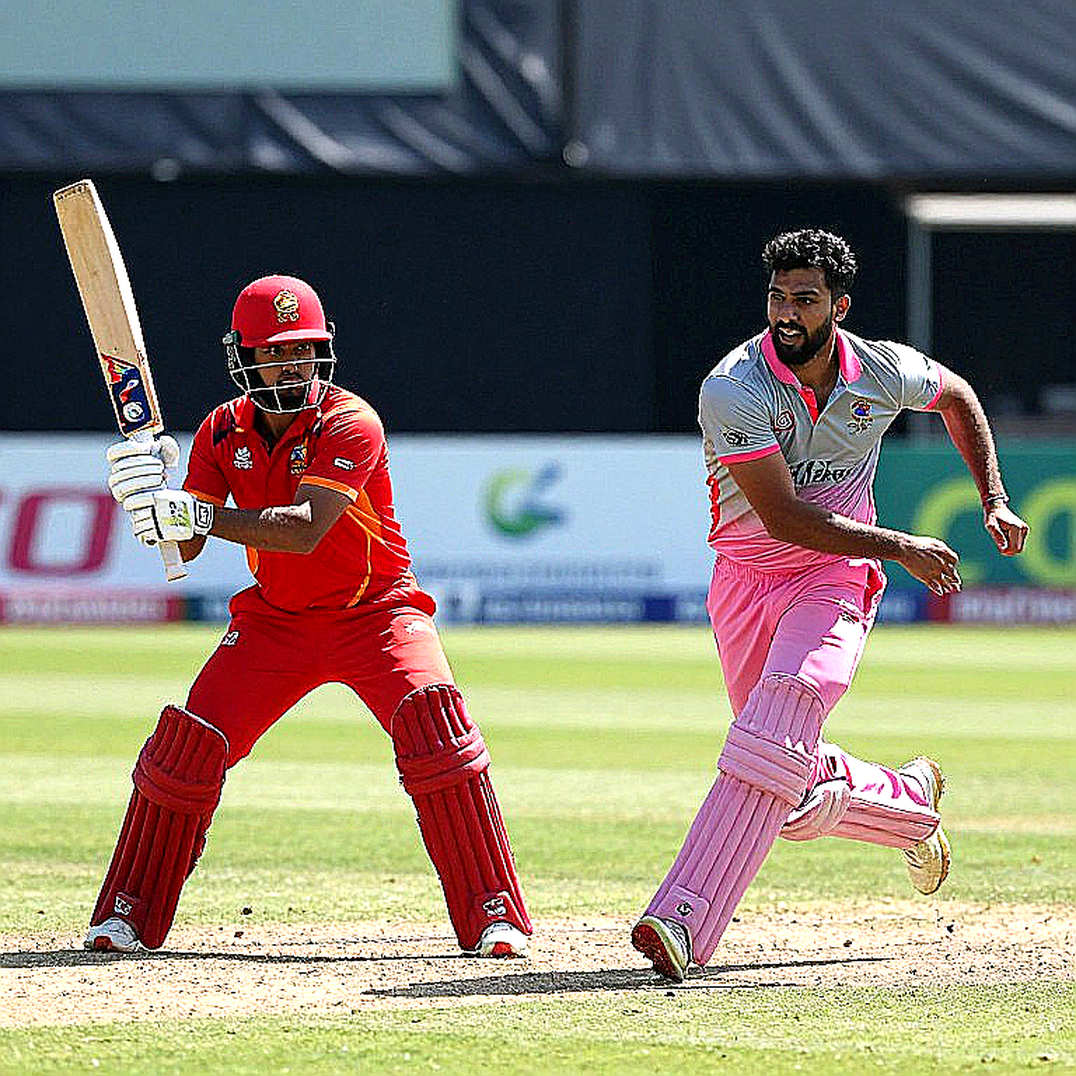
A yorker, almost negligible in Test cricket, becomes the most valuable weapon in T20. A slower ball, which in Tests would be an experiment, is a stock delivery in T20. This format-driven hierarchy is precisely why a bowler is called a 'T20 specialist'.
In ODIs the same structure shifts. The first ten overs build an aggressive base, the middle session is about restraint and partnership, and the last ten repeat the death-over mathematics of T20 — but with a five-bowler budget and the behaviour of an older ball. A batter who can play ten balls at a 200-plus strike rate in T20 will not necessarily be able to absorb thirty overs from the eleventh over in an ODI. This is a question of role, and role determines the interpretation of every statistic.

4. The Separate Logic of Test Cricket: Asia's Real Bowling Test
If any part of format analysis is hardest, it is Test cricket. There is no single simple measure of Test success — five days, varying pitches, separate innings and prolonged weather effects. And this is where Asian cricket's greatest international revelation occurs.
Subcontinental home pitches are generally regarded as spin-friendly. Asian teams' home Test records therefore often look very strong, while the same teams struggle abroad against English swing or Australian bounce. Until bowling has a genuine 'Plan B' of bounce and discipline, home statistics win matches — and away tours expose the reality.
This conclusion requires no named player. It is a structural truth: in Test cricket, an Asian team's real identity is defined by how many long spells its fast bowlers can repeat, and by whether its spinners remain effective when conditions are not favourable rather than when they are.
5. Home and Away: The Only True Measure of Strength
Cricket's performance gap between home and away conditions is larger than in almost any other team sport. The difference is not merely weather; it is the nature of the ball, the behaviour of the pitch, the question of routine and the weight of psychological pressure.
The most honest measure of any Asian team's real capability is therefore: what does it do on foreign soil? A 60% win rate at home on spin-friendly pitches is normal for any team with two good spinners. But in Southampton, in Melbourne, or in Karachi — where the ball behaves differently — how well that team stands up is the real evaluation.
Even within Asia, 'home conditions' means a great deal. The pitch in Karachi, the pitch in Colombo and the pitch in Dhaka differ significantly — and for one Asian team, another Asian team's home is also 'abroad'. The psychological tension of competitions like the Asia Cup arises precisely here: it is neither fully home nor fully away.
6. The ACC and the Subcontinental Ecosystem
Asian Cricket Council competitions — the Asia Cup and the Emerging Asia Cup — occupy a distinct role in this framework. They are neither part of the ICC global cycle in the way a World Cup is, nor commercial in the way a franchise league is. Their value is geographic and political: they bring neighbouring countries onto a platform where the result is recorded not only in a table but in public sentiment.
A direct consequence is that rankings are not the best measure when analysing ACC events. In the one-day format, the gap between a top-ranked and a lower-ranked team is numerical, but the pressure gap is not. Psychological pressure is greatest on the team from which victory is most expected.
A second factor is that ACC competitions often bring together teams that do not play bilateral series against each other. These platforms therefore function as a form of informal diplomacy. Where bilateral relations do not exist, a multi-nation tournament at a neutral venue is the only practical option left. That is a structural necessity, not an administrative preference.
7. Franchise Leagues: The Revenue Ladder and Its Cost
The biggest economic truth about Asian cricket is that not all leagues are alike. IPL, PSL, BPL, LPL and the newer Gulf leagues all sit under one label — 'T20 league' — but the gap between them in revenue, franchise valuation, broadcast-rights size and global pull is enormous.

This gap is the biggest analytical trap. Treating a player's auction price as proof of international capability is a fundamental error. Two things are entirely independent: market value and cricketing capability. An auction price is the outcome of a bounded bidding process shaped by team needs, roster quotas, local-player requirements and bidder psychology. It measures market conditions at a moment, not a player's quality.
Understanding this distinction matters because Asian cricket's public debate routinely conflates the two. The consequence is that an expensive player carries excess pressure, while a cheaply bought player is systematically under-rated.
8. The Economics of the Auction: Types of Premium
Auction analysis is incomplete until the reason for a given premium is identified. Broadly, four categories emerge: young local star premium (future asset plus fan appeal), all-rounder premium (demand across two disciplines), scarce-role premium (wicketkeeper-batter, a fast bowler who can bowl the death overs, a left-arm spinner), and late-stage urgency or 'panic bidding'.
To read a price correctly, one must know which category a player belongs to and what the team's roster lacks. In Asian franchise cricket this pattern is clear: demand for fast bowlers stays persistently high, because a death-overs bowling crisis is every team's crisis.
9. NOC, Workload and the National Team Versus League Conflict
The most live structural tension in Asian cricket is the calendar conflict between national duty and franchise leagues. On one side is a board's central-contract system; on the other, the leagues' global window structure.
The NOC — the No Objection Certificate — is the hinge of this entire architecture. A board grants a player permission to play in a foreign league, and a board can also withhold it on national-priority grounds. When a bilateral international series or an ICC event is scheduled, that permission becomes the central question.
The tension follows a familiar pattern: some players withdraw from bilateral internationals while appearing in leagues, or take rest under workload management — and fans accuse them of prioritising league cricket. That debate is not really about a player's character. It is a debate about a system in which three different employers claim the same individual: the country, the franchise and the player himself.
10. Player Technique, Age Curves and the Mathematics of Injury
Cricket's 'age curve' principle is simple, but different for every role. Fast bowlers peak early and carry the heaviest physical load — stress fractures, side strains, knee problems. Spinners decline slowest; their craft rests not on pace but on patience, variation and reading the pitch, which is why they can remain effective for a long time. For batters the peak generally arrives between the late twenties and mid-thirties — though it depends on format and role.
The case of Jasprit Bumrah is relevant here not because of how many wickets he takes, but because of how he is managed. Workload management in fast bowling is a mandatory discipline, and format selection has become an entirely sports-scientific decision. Players such as Rashid Khan, whose career is built around several international franchise leagues, show the other side of the argument: when a player's reach becomes global, national-team priority becomes a demand for a clear, written and transparent policy. Shakib Al Hasan's long career illustrates how multi-dimensional the pressure on an all-rounder becomes across three formats plus league duty.
Injury history must be part of any analysis, because no statistic is complete without the medical history in which it was produced.
11. Team Structure: Batting Depth, Bench and Generational Change
A team must be evaluated on four pillars: batting depth (how many players average 30-plus and at what position), bowling composition (the pace-spin ratio and its adaptation), bench depth (cover for injury), and age structure (how many players will exit within five years).
A shared weakness among Asian teams has been that batting depth is concentrated at the top. The lower order is often reduced to a 'score 20 runs' role. That works in T20, but in Tests and ODIs it puts the team in crisis, because pressure arrives precisely when the top order departs early.
The generational question is also structural. A team whose three or four key players approach retirement simultaneously faces pressure to fill several places at once — and that pressure pushes selection committees toward 'immediately ready stars', which damages the slower process of youth development.
12. Governance: Revenue Distribution and 'Big Three' Politics
International cricket's most contested administrative question is ICC revenue distribution. A system in which larger markets hold greater power — commonly referred to as the 'Big Three' arrangement — directly affects the financial autonomy of smaller member nations.
The debate is technical, but its consequence is visible: boards without adequate revenue cannot spend on domestic structures, women's cricket and development programmes. The result is a permanent inequality in international competition that is not about skill but about financial capacity.
A second dimension is that smaller boards become steadily more dependent on larger ones — in hosting tours, broadcast agreements and neutral-venue arrangements. From a governance standpoint this dependency is a structural risk, because it limits decision-making independence.
13. Integrity: The ACU, Match-Fixing and the Risk in Lower-Tier Leagues
At the centre of cricket's integrity architecture sits the ICC Anti-Corruption Unit. Its mandate covers monitoring of match-fixing, spot-fixing and betting-related contacts.
The largest historical integrity breaches in cricket come from this domain — the 2026 Hansie Cronje affair, the 2026 Pakistan spot-fixing case, and the 2026 IPL spot-fixing case. All three demonstrate that the risk lies not only with 'bad individuals' but with any system combining opaque ownership, rapid money flows and weak monitoring.
In the Asian context, one clear structural risk is that lower-tier and emerging leagues operate under comparatively weaker regulatory oversight. This is not an allegation against any particular league but a general risk category: where financial stakes are high, transparency low and player income unequal, integrity monitoring must be strongest.
14. DRS, DLS and the Credibility of Decisions
Technology has transformed cricket's decision-making, but it has not reduced controversy. In DRS, the principle of 'umpire's call' is a pragmatic compromise: when ball-tracking margin falls within the technology's error zone, the on-field decision stands. This is scientifically rational, since technology itself has limits — yet it is uncomfortable for fans, who see a difference between 'correct' and 'applied'.
The DLS method is the standard for target revision in rain-affected matches. Its mathematical validity is widely accepted, but in Asian tournaments, where the monsoon has a large impact, DLS's decisive influence is often the focus of criticism.
The shared lesson is that technology does not guarantee fairness; it only makes decisions more transparent. And transparency is valuable only when the process behind it is public too.
15. Public Narrative: The 'Next Sachin' Delusion and Media Pressure
A familiar pattern in South Asian cricket media is star manufacture: attaching a 'next great' label to a young player after one good innings. This is not merely a journalistic habit but a market logic — labels sell, and new faces are the cheapest asset for sponsors.
The cost is concrete. A player under such a label carries an expectation burden so heavy that an ordinary bad run is recorded as 'failure'. Sports science recognises that taking risk and failing is essential during the learning phase — but public narrative does not tolerate it.
The most useful rule in narrative analysis is to test every large claim against two things: sample size (how many matches, how many formats, how many conditions) and the quality of opposition. A brilliant innings on debut and sustained utility across three seasons are not the same thing.
16. Women's Cricket: Asia's Fastest-Growing Asset
If there is one area of Asian cricket showing genuine structural growth, it is women's cricket. The public pull around players such as Smriti Mandhana, and the rise of a women's franchise league, signal this shift.
The change matters because investment in women's cricket was previously distributed very unevenly. When a domestic franchise structure exists, players gain a professional career path instead of depending solely on international fixtures. This is not only about income but about the talent supply chain: more girls choose the sport when they can see a viable life trajectory in it.
The challenge is that women's cricket's growth is often measured against men's commercial benchmarks, which is not a like-for-like comparison. The correct measure is whether full-time careers now exist, and whether the number and quality of domestic matches have increased.
17. Domestic Structure and the Talent Supply Chain
The greatest asset of any Asian cricket nation is its domestic competition, because that is where international players come from. Domestic quality is determined by three things: diversity of pitches, number of matches, and financial security.
This is where Asian cricket's largest inequality lies. In some countries the domestic structure is so vast that competition itself becomes the selection process — hundreds of players fight for one place. In others, the number of domestic matches is so small that national selection is almost automatic.
The effect on international performance is direct. Where domestic competition is intense, players learn to play under pressure. Where it is not, the international stage becomes their first real pressure — and the cost of learning is paid in matches.
18. Climate, Calendar and the Congestion Crisis
A geographic fact of the Asian cricket calendar is that it is tied to the monsoon. Lost match days to rain, frequent DLS application and demand for neutral venues are climate-driven administrative problems, not organisational carelessness.
The second fact is calendar congestion. International series, ICC events and multiple franchise leagues are increasingly hard to fit into a single year. The most direct effect is on players' bodies. When a fast bowler plays continuously across four formats in a year, injury becomes not an accident but a mathematical expectation.
The solution is policy, not technology: format-specific player management, clear rest cycles, and contracts that recognise workload. Boards that have done this have saved more player-years over the long run.
19. The 2028 Olympics and T20's Shifting Geography
Cricket's inclusion in T20 format at the 2028 Los Angeles Olympics has set off a new structural churn. It will affect Asian cricket in three ways.
First, an Olympic medal carries a prestige different from any ICC trophy, because it holds recognition outside the sport's own world. Second, it may re-centre national-team priority, providing a counterweight to a league-centric calendar. Third, it gives the T20 format the status of an 'Olympic discipline', which can raise both investment and broadcast interest.
There is a warning too: Olympic-focused preparation tends to be short-term, whereas structures like Test cricket demand long-term investment. If a four-year cycle becomes a four-year plan and other formats are left behind, that will be contraction, not development.
20. Conclusion: Cricket's Value Comes from the Game, Not the Market
This analysis has one central conclusion. Asian cricket's real strength lies not in the size of its market but in the depth of its game. Markets fluctuate — broadcast rights rise and fall, leagues surge and decline, auction prices swing. But playing depth is built slowly and, once built, lasts for decades.
Three disciplines are therefore essential. First, format discipline: never mix Test, ODI and T20 metrics. Second, sample discipline: never draw conclusions from one match, and always keep the quality of opposition in view. Third, source discipline: never treat an auction price as proof of capability, and always separate popular narrative from fact.
Asian cricket has everything a global sport needs: talent, fans, money and competition. What is often in short supply is analytical honesty — the capacity to admit what our claims are actually based on. The day that discipline arrives, the debates will not become fewer, but they will become better.